
June 27th, 2024
Are you struggling to sell or rent your home due to its low EPC (Energy Performance Certificate) rating? Energy efficiency is a major factor for many, so you might be struggling for a while if you don’t look into how you can improve your home’s EPC rating.
Luckily, we’ve got all the information you need to make the biggest improvements to your home’s energy efficiency, including the renewable energy options you have at your disposal.
There are seven ways you can improve your property’s EPC rating, which we’ll get into in more detail further down in this blog post:
Let’s take a closer look at all of these factors that affect your EPC rating, starting with insulation.
Since heat rises, uninsulated homes can lose 25% of their heat through the roof. Loft and roof insulation is a highly effective improvement you can make to your home’s energy efficiency, especially if your current insulation isn’t doing a great job at keeping the heat in.
Loft insulation at about 270mm thickness will create a barrier that traps more heat inside, improving your EPC rating and helping you save money on those bills.
Many homes, especially older homes built in the early 20th century, lose heat through the walls — sometimes as much as 35%! Installing cavity wall insulation is a straightforward energy efficiency measure that can save on heating costs.
Solid wall insulation tackles the heat loss of older homes built with solid brick or stone walls. It involves adding rigid insulation boards, insulation-filled frames, and thermal lining directly to the inside of the walls.
This is generally cheaper and easier to install than external insulation but can sometimes be inconvenient as you need to remove and refit skirting boards, door frames, and other fittings. It also slightly reduces room size by around 100mm (the thickness of the board).
Just like heat rises, it also escapes your home downwards through uninsulated floors – around 10% of home heat, in fact. The type of insulation you use depends on your floor.
For example, suspended timber floorboards tend to have a gap between them and the ground. You can insulate this gap with spray foam, rigid boards, or mineral wool batts.
For solid concrete floors, the insulation (usually a rigid insulation board) is laid directly on the existing floor before installing the new covering (e.g. tiles, laminate, wood, etc.)
Traditional single-pane windows are notorious for letting heat escape and can be a major cause for a lower EPC rating. Upgrading single-pane windows to double or triple-glazing can go a long way to improving this.
Double glazing is simply two panes of glass separated by a sealed gap of air. This gap acts as the insulator, reducing heat transfer compared to a single pane of glass.
Triple glazing simply adds another pane of glass and an air gap to improve this insulation even more. With three air gaps, your home retains heat better and has other conveniences, like additional soundproofing.
However, keep in mind that triple glazing is often a costly expense, so double glazing adds a good balance of cost and energy efficiency.
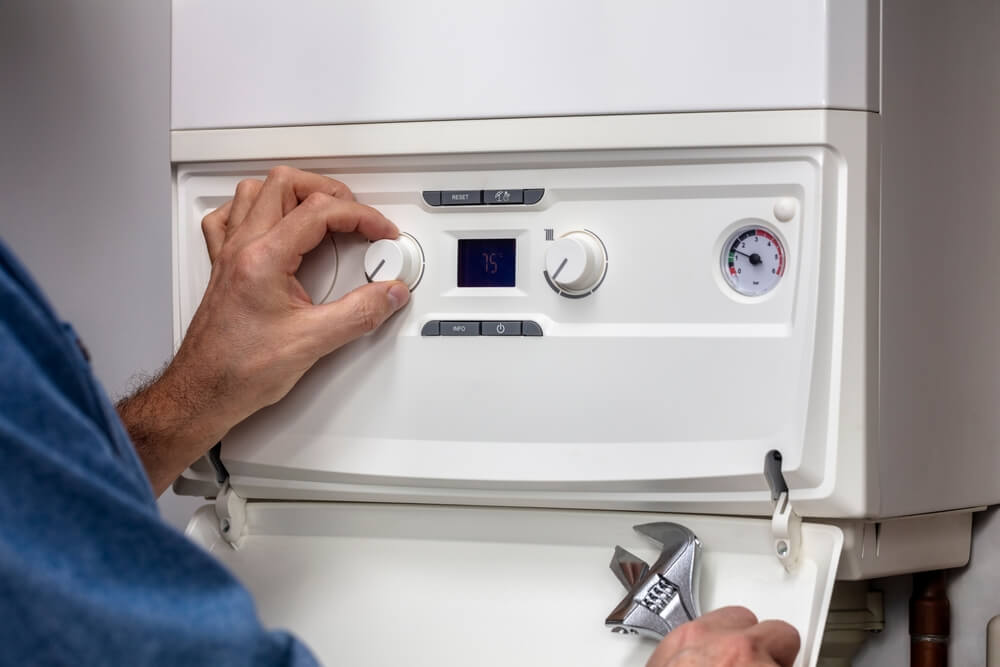
Modern central heating systems are a great way to heat your home efficiently. Not only can they improve your EPC rating, but they’ll also use less energy, helping you save money and live more sustainably.
The efficiency of your boiler plays a big role in controlling your heating costs and EPC rating. Older models are less efficient, sometimes converting only a fraction of the energy they consume into usable heat.
Installing a modern, energy-efficient boiler, such as a gas combi boiler, can have a great impact on your EPC rating while also helping you save on your heating bills.
Renewable energy heating systems such as ground- and air-source heat pumps are also an option. These systems transfer heat from the ground or air, even when the weather’s cold, to heat your home.
Plus, since they offer long-term savings and are cheaper to run, they are a popular option if you’re looking to improve your home’s EPC rating.
Yes! Funding is available for energy-efficient home upgrades. If you’re eligible, you could receive a grant that covers up to 100% of the cost of your home heating through initiatives like the ECO4 grant scheme, Boiler Upgrade Scheme and Great British Insulation Scheme.
Eligibility differs for each home insulation grant, but they often look at things like your income and benefit status. Not sure if you qualify? Give us a call today, and we will help you figure it out!
Do you need to upgrade your property’s EPC rating but don’t know where to start? We have fifty years of experience keeping Britain’s homes warm, and many more happy customers.
Whether you need help applying for a potential home heating grant or need a reliable and professional team to install your home’s new insulation, Grant Store can help.
Let’s get your home sold or rented once and for all with a better EPC rating today. Just give us a call to get started with a free, no-obligation quote.

June 27th, 2024

June 27th, 2024

June 11th, 2024
June 11th, 2024

June 11th, 2024
June 11th, 2024
June 1st, 2024
May 22nd, 2024

April 25th, 2024